




Football

Share
Published 16:49 15 Aug 2019 BST
Explore more on these topics:
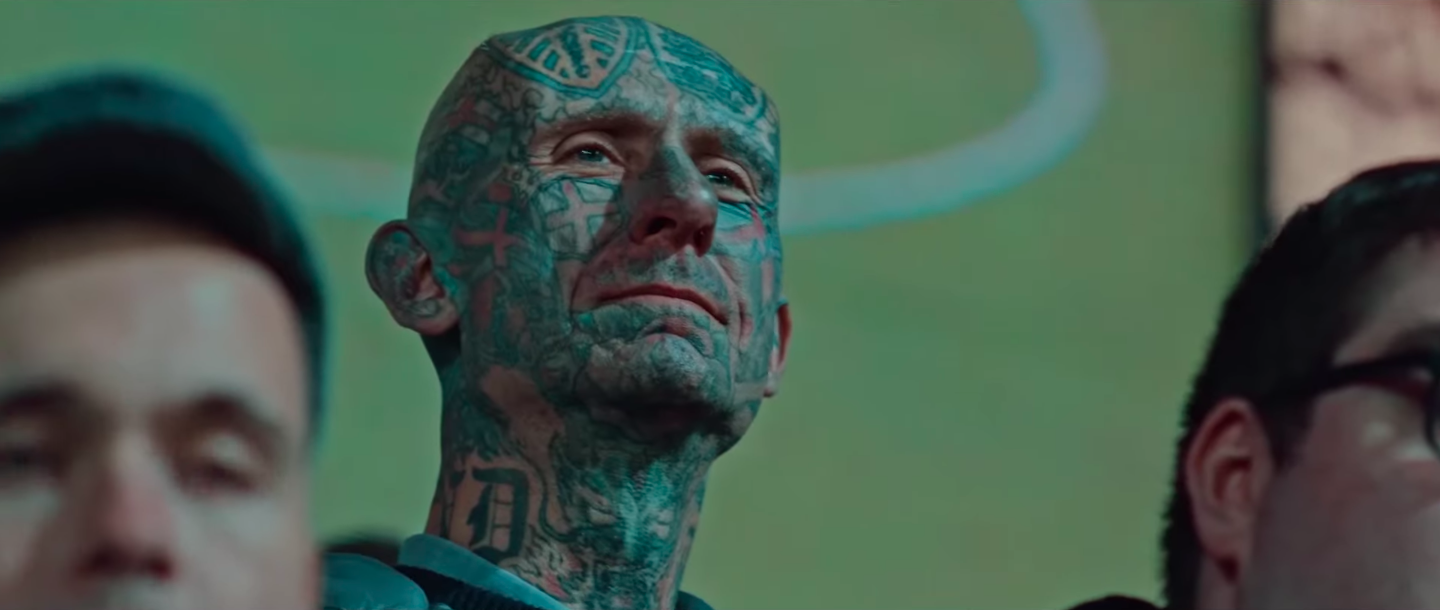 Already, it seems the proud working-class history of Leeds is being saved for maximum emotional impact later on, perhaps after they (spoiler alert if you don't follow football) lose in the playoff semi-finals in almost comically catastrophic circumstances, where the close-up tears of devastated supporters spending hundreds of pounds on all their shirts and tickets and their half-time pie and beer will be spliced in between the shots of Radrizzani in the director's box looking mildly annoyed now he can't now move to Yorkshire for a year to piss off his wife. That's just a guess. Forgive me. I just don't find millionaire owners the most interesting facet of a traditional football club. Take, for comparison, Sunderland 'Til I Die, which opened with a rousing sermon in a local church by a Sunderland-supporting priest on how the football club could unite the city. The scene after that took us straight into the player's dressing room and the unflinching thoughts of club captains John O'Shea and Lee Cattermole.
Anyway, back to Take Us Home. Back to Leeds. We hear from Phil Hay, previously the Leeds beat writer for the Yorkshire Evening Post, now poached up by The Athletic, along with supporters themselves on the importance of the team in a one-club city. Somehow the sentence "In Leeds everyone's Leeds" makes perfect, crystalline sense. It's a maxim and call to arms all at once. A mother tells the camera: "It's my religion and I'm off praising. I'm off to church." We see the entirety of Elland Road in unison belting out that infectious "All Leeds Aren't We". We are given a brief glimpse into the glory years: Don Revie and Billy Bremner's combative team of the 60s, the First Division-winning side of '92, the Champions League semi-finalists of 2001, before Russell really starts to lay it on thick. It's really building to something, you can tell.
"But after overspending and financial mismanagement, they went into free-fall. Now, after 15 years in the wilderness, hope is returning..." Crowe continues, and just when you think you might see him, the man 99% of us are watching the documentary for, it cuts back to, yep. Andrea Radrizzani. And then testimony from his wife on how great he is.
If he's the hero of this story, well. You're just telling it wrong I'm afraid.
Already, it seems the proud working-class history of Leeds is being saved for maximum emotional impact later on, perhaps after they (spoiler alert if you don't follow football) lose in the playoff semi-finals in almost comically catastrophic circumstances, where the close-up tears of devastated supporters spending hundreds of pounds on all their shirts and tickets and their half-time pie and beer will be spliced in between the shots of Radrizzani in the director's box looking mildly annoyed now he can't now move to Yorkshire for a year to piss off his wife. That's just a guess. Forgive me. I just don't find millionaire owners the most interesting facet of a traditional football club. Take, for comparison, Sunderland 'Til I Die, which opened with a rousing sermon in a local church by a Sunderland-supporting priest on how the football club could unite the city. The scene after that took us straight into the player's dressing room and the unflinching thoughts of club captains John O'Shea and Lee Cattermole.
Anyway, back to Take Us Home. Back to Leeds. We hear from Phil Hay, previously the Leeds beat writer for the Yorkshire Evening Post, now poached up by The Athletic, along with supporters themselves on the importance of the team in a one-club city. Somehow the sentence "In Leeds everyone's Leeds" makes perfect, crystalline sense. It's a maxim and call to arms all at once. A mother tells the camera: "It's my religion and I'm off praising. I'm off to church." We see the entirety of Elland Road in unison belting out that infectious "All Leeds Aren't We". We are given a brief glimpse into the glory years: Don Revie and Billy Bremner's combative team of the 60s, the First Division-winning side of '92, the Champions League semi-finalists of 2001, before Russell really starts to lay it on thick. It's really building to something, you can tell.
"But after overspending and financial mismanagement, they went into free-fall. Now, after 15 years in the wilderness, hope is returning..." Crowe continues, and just when you think you might see him, the man 99% of us are watching the documentary for, it cuts back to, yep. Andrea Radrizzani. And then testimony from his wife on how great he is.
If he's the hero of this story, well. You're just telling it wrong I'm afraid.
 Director of Football Victor Orta and Chief Executive Angus Kinnear are both introduced to the audience long before Marcelo Bielsa, who comes several minutes later, is even mentioned. Even then, he appears as though a consequence of the owner's genius. As Kinnear explains: "Andrea and Victor suggested his name as someone we should be looking at. I had a wry smile as neither of them lack ambition but sometimes their ideas aren't routed in reality."
If you're a football fan you'll know all about Bielsa - the cult of personality that surrounds him, the mercurial nature of his appointments and departures at clubs, the idiosyncratic way his teams approach the game of football. You'll know that Pep Guardiola and Mauricio Pochettino worship him and you'll know that he signed the latter when he was just a boy. You'll know about the 3-3-3-1. You'll be watching this series to see more of him.
It's all neatly summarised by Russell Crowe, regardless, complete with the appropriately rousing imagery of his old haunt in Rosario, Argentina: Newell's Old Boys, the team stadium named after him. "If Bielsa doesn't love a city he will not go," explains a former Old Boy's player, Ricardo Lunari, to the anticipated, presumed ecstasy of Leeds diehards watching on their sofa.
Finally, 19 minutes, in we hear the man himself, via voiceover, explain in his own terms the reason for taking the job. It lasts less than a minute and that's mostly thanks to the deliberate way Bielsa has of speaking.
It's at this point, however, that there is a noticeable tonal shift in the film and suddenly it starts to become what a football documentary should be: about the fans, the manager and the players and the special bond between the three that comes and goes, strengthens and folds, crystallises or fades throughout the course of a single season. An instant highlight is Kalvin Phillips discussing the seemingly instantaneous, city-wide affection Bielsa with his gran and then his successful trial at Leeds, the club he supported as a boy, in which he scored five goals in three games.
We then cut to two fans in the pub admitting how surprised they were by his development under his new irrepressible manager. Afterwards, the oft-maligned captain and centre back, Liam Cooper, talks through what it means to be Leeds United supporter playing for the club as a fan and how they are just normal people who, occasionally, are made to suffer through the unfair projections and weight of expectation people place upon them as professional footballers.
It's a rare, fleeting insight into the perhaps underexplored murky waters of self-doubt and fear of failure that can impact upon an athlete, and the segment is brilliantly juxtaposed as Bielsa explains Cooper's merits as a captain, through his selflessness and humility, immediately after.
We also return to the two men in the pub who speak proudly of the base of good, English, Yorkshire lads coming through at the club, exemplified by Cooper and Phillips.
Director of Football Victor Orta and Chief Executive Angus Kinnear are both introduced to the audience long before Marcelo Bielsa, who comes several minutes later, is even mentioned. Even then, he appears as though a consequence of the owner's genius. As Kinnear explains: "Andrea and Victor suggested his name as someone we should be looking at. I had a wry smile as neither of them lack ambition but sometimes their ideas aren't routed in reality."
If you're a football fan you'll know all about Bielsa - the cult of personality that surrounds him, the mercurial nature of his appointments and departures at clubs, the idiosyncratic way his teams approach the game of football. You'll know that Pep Guardiola and Mauricio Pochettino worship him and you'll know that he signed the latter when he was just a boy. You'll know about the 3-3-3-1. You'll be watching this series to see more of him.
It's all neatly summarised by Russell Crowe, regardless, complete with the appropriately rousing imagery of his old haunt in Rosario, Argentina: Newell's Old Boys, the team stadium named after him. "If Bielsa doesn't love a city he will not go," explains a former Old Boy's player, Ricardo Lunari, to the anticipated, presumed ecstasy of Leeds diehards watching on their sofa.
Finally, 19 minutes, in we hear the man himself, via voiceover, explain in his own terms the reason for taking the job. It lasts less than a minute and that's mostly thanks to the deliberate way Bielsa has of speaking.
It's at this point, however, that there is a noticeable tonal shift in the film and suddenly it starts to become what a football documentary should be: about the fans, the manager and the players and the special bond between the three that comes and goes, strengthens and folds, crystallises or fades throughout the course of a single season. An instant highlight is Kalvin Phillips discussing the seemingly instantaneous, city-wide affection Bielsa with his gran and then his successful trial at Leeds, the club he supported as a boy, in which he scored five goals in three games.
We then cut to two fans in the pub admitting how surprised they were by his development under his new irrepressible manager. Afterwards, the oft-maligned captain and centre back, Liam Cooper, talks through what it means to be Leeds United supporter playing for the club as a fan and how they are just normal people who, occasionally, are made to suffer through the unfair projections and weight of expectation people place upon them as professional footballers.
It's a rare, fleeting insight into the perhaps underexplored murky waters of self-doubt and fear of failure that can impact upon an athlete, and the segment is brilliantly juxtaposed as Bielsa explains Cooper's merits as a captain, through his selflessness and humility, immediately after.
We also return to the two men in the pub who speak proudly of the base of good, English, Yorkshire lads coming through at the club, exemplified by Cooper and Phillips.
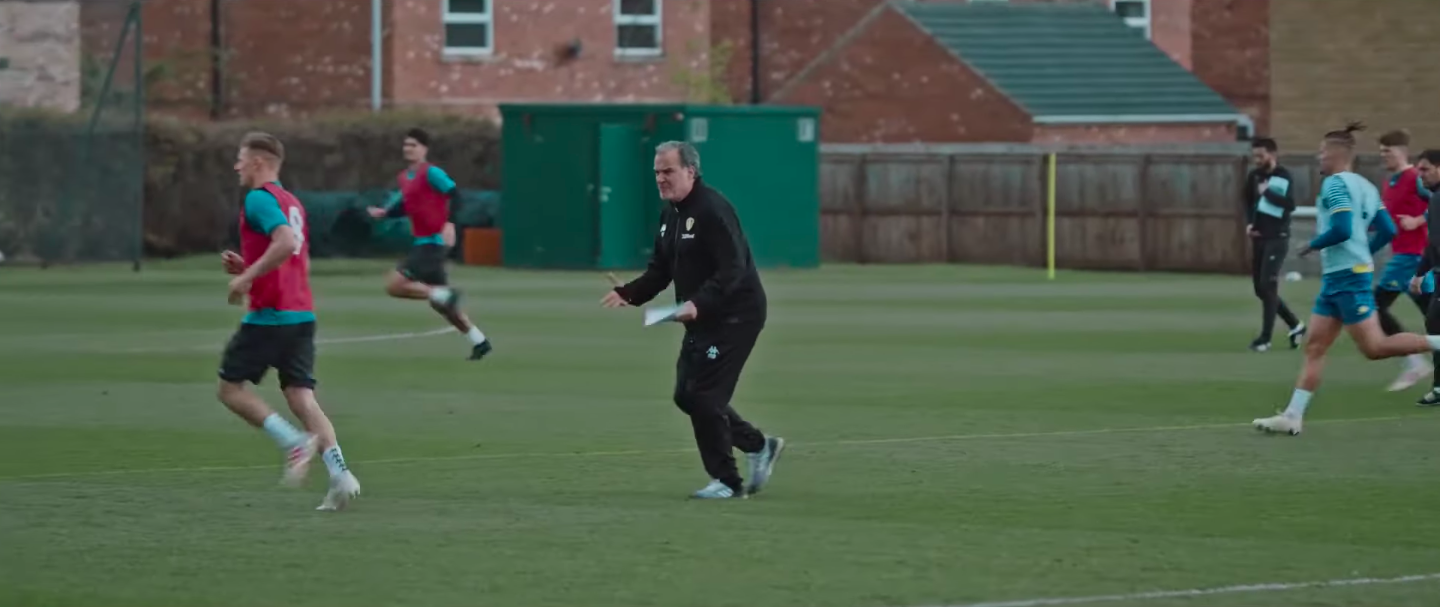 Finally, we get what we signed up for. It starts to look and feel like the documentary we hoped it would be. We're shown a whole cascade of different shots of the Leeds players running themselves ragged in training whilst Bielsa, clipboard in hand, stands in the centre circle screaming his lungs out in Spanish. We get Ander Herrera, one of his former players during his time in Bilbao, talking about how hard he works players in those sessions. We get shots of Liam Cooper running through the ladder. Pablo Hernandez volleying passes. Kalvin Phillips sprinting around, getting shouted at by Bielsa, and then shouting "I'm sorry" back whilst looking happy and confused all at the same time.
We get Luke Ayling explaining how painful it is to come home, fancy a takeaway, and then remember that Bielsa is measuring your body fat in the morning and has instructed you to lose four kilograms before the season starts. Shots of Kalvin Phillips, in his pants, enthusiastically getting weighed. Shots of Kemar Roofe physically wrestling someone to the ground during a practice game and then a coach bringing the whistle to his lips, pausing, and then letting play carry on. Shots of Adam Forshaw, in his Range Rover, earnestly telling the camera that "since he came in, I've acted like a sponge."
This, this *gesturing wildly at the above like I'm Antonio Conte on the sideline and my team isn't pressing in the exact manner I had demanded* is what makes a good football documentary. There's a simple reason for that. It's the stuff the fans don't get to see. It's the stuff that will endear them to these players no matter what happens on the pitch during the season. It's the stuff that makes them people with stories, nuance and depth. Not just a name and a number and a position and a general interpretation of whether he is good or shit. The only two absolutes in the minds of the modern fan. Of course, having Bielsa front and centre as a semi-messianic figure, a one-man sea change of a team's culture really helps bring it out of everyone else.
Finally, we get what we signed up for. It starts to look and feel like the documentary we hoped it would be. We're shown a whole cascade of different shots of the Leeds players running themselves ragged in training whilst Bielsa, clipboard in hand, stands in the centre circle screaming his lungs out in Spanish. We get Ander Herrera, one of his former players during his time in Bilbao, talking about how hard he works players in those sessions. We get shots of Liam Cooper running through the ladder. Pablo Hernandez volleying passes. Kalvin Phillips sprinting around, getting shouted at by Bielsa, and then shouting "I'm sorry" back whilst looking happy and confused all at the same time.
We get Luke Ayling explaining how painful it is to come home, fancy a takeaway, and then remember that Bielsa is measuring your body fat in the morning and has instructed you to lose four kilograms before the season starts. Shots of Kalvin Phillips, in his pants, enthusiastically getting weighed. Shots of Kemar Roofe physically wrestling someone to the ground during a practice game and then a coach bringing the whistle to his lips, pausing, and then letting play carry on. Shots of Adam Forshaw, in his Range Rover, earnestly telling the camera that "since he came in, I've acted like a sponge."
This, this *gesturing wildly at the above like I'm Antonio Conte on the sideline and my team isn't pressing in the exact manner I had demanded* is what makes a good football documentary. There's a simple reason for that. It's the stuff the fans don't get to see. It's the stuff that will endear them to these players no matter what happens on the pitch during the season. It's the stuff that makes them people with stories, nuance and depth. Not just a name and a number and a position and a general interpretation of whether he is good or shit. The only two absolutes in the minds of the modern fan. Of course, having Bielsa front and centre as a semi-messianic figure, a one-man sea change of a team's culture really helps bring it out of everyone else.
 That period is undoubtedly the highlight of the first episode of Take Us Home and it doesn't last long enough. To end the episode we're given a ham-fisted, fully-blown saviour narrative about the signing of Patrick Bamford (yikes, to be honest) and a quicker, but far superior, bit on the arrival of Barry Douglas. We also get the trippy surrealism of Russell Crowe explaining the format of the Championship in a voice even more Gladiator than his narration in, er, Gladiator. Unbelievable.
The first episode ends with highlights of Leeds' opening game against Stoke City who, the documentary emphasises, and I mean really emphasises, were apparently favourites to go up last season and some kind of footballing juggernaut (despite not being any good at all whilst they were in the Premier League and then consequently finishing 16th. For instance, the following sentence is actually said following a Benik Afobe penalty to briefly make it 2-1: "Last season, Leeds might have buckled after such a setback. But this... is a new... Leeds United." Yeah.
A quick rush through the first eight games of the season follows, which leaves the team top of the Championship. But, as we know, things are never that easy. Particularly in streaming subscription service football documentaries. Crowe warns us of a "long, twisting road ahead. And what is about to unfold will be one of the most dramatic seasons in this club's history," before we are given brief glimpses into the future to entice us into committing to this series. Pontus Jansson is asked whether the team should have let Aston Villa score against them in one of the most controversial incidents in football last season and replies "Absolutely not." Patrick Bamford is shown strumming a guitar, for some reason. Kalvin Phillips is, once more, shown looking simultaneously happy and confused at once.
And then we get Bielsa, sat, ruminating in the stands. Bielsa slowly walking out of the dugout. More of all that stuff, the players at the heart of it, and most of all, more of him, and Take Us Home will be well worth its place alongside Sunderland Til I Die and All or Nothing: Manchester City as valuable, insightful looks into a modern football team.
Any more of Andrea Radrizzani fluff in its place, however, and the wheels will come off this documentary quicker than it did Leeds United's playoff run. There's a great story here, but it's one that takes place on the pitch and in the stands. Not the boardroom.
Take Us Home: Leeds United launches on Prime Video on 16th August
That period is undoubtedly the highlight of the first episode of Take Us Home and it doesn't last long enough. To end the episode we're given a ham-fisted, fully-blown saviour narrative about the signing of Patrick Bamford (yikes, to be honest) and a quicker, but far superior, bit on the arrival of Barry Douglas. We also get the trippy surrealism of Russell Crowe explaining the format of the Championship in a voice even more Gladiator than his narration in, er, Gladiator. Unbelievable.
The first episode ends with highlights of Leeds' opening game against Stoke City who, the documentary emphasises, and I mean really emphasises, were apparently favourites to go up last season and some kind of footballing juggernaut (despite not being any good at all whilst they were in the Premier League and then consequently finishing 16th. For instance, the following sentence is actually said following a Benik Afobe penalty to briefly make it 2-1: "Last season, Leeds might have buckled after such a setback. But this... is a new... Leeds United." Yeah.
A quick rush through the first eight games of the season follows, which leaves the team top of the Championship. But, as we know, things are never that easy. Particularly in streaming subscription service football documentaries. Crowe warns us of a "long, twisting road ahead. And what is about to unfold will be one of the most dramatic seasons in this club's history," before we are given brief glimpses into the future to entice us into committing to this series. Pontus Jansson is asked whether the team should have let Aston Villa score against them in one of the most controversial incidents in football last season and replies "Absolutely not." Patrick Bamford is shown strumming a guitar, for some reason. Kalvin Phillips is, once more, shown looking simultaneously happy and confused at once.
And then we get Bielsa, sat, ruminating in the stands. Bielsa slowly walking out of the dugout. More of all that stuff, the players at the heart of it, and most of all, more of him, and Take Us Home will be well worth its place alongside Sunderland Til I Die and All or Nothing: Manchester City as valuable, insightful looks into a modern football team.
Any more of Andrea Radrizzani fluff in its place, however, and the wheels will come off this documentary quicker than it did Leeds United's playoff run. There's a great story here, but it's one that takes place on the pitch and in the stands. Not the boardroom.
Take Us Home: Leeds United launches on Prime Video on 16th August
Football
Football
Football
Football
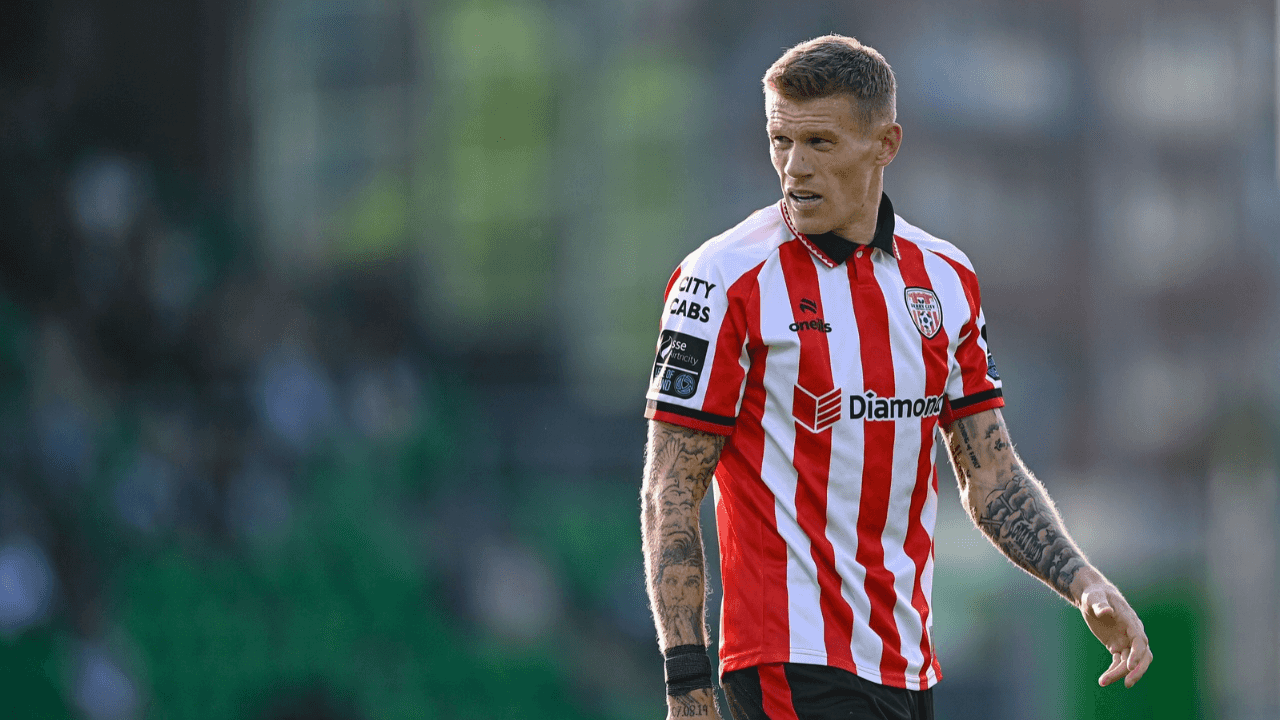
James McClean rightly slammed for comments on men’s therapy
Not his finest moment. Former Ireland international James McClean has come under fire for recents comments made during an interview with journalist Paul Kimmage. Although never shy of courting controversy, McClean’s actions did little to affect his Ireland career, with the Derry man retiring after 103 caps. However, his second spell at Derry, following his […]
Football
3 days ago
The Premier League GW7: Follow all of the viral moments in our live hub
Football returns at the Hill Dickinson Stadium! Everton host Chelsea in the early kick off as the Premier League returns, with David Moyes’ Toffees aiming to remain unbeaten. At 3pm, Brentford host Liverpool, whilst Hull City travel to Fulham. Elsewhere in the North West, Man City host the recently promoted Ipswich Town, who have enjoyed […]
Football
4 days ago
Football
Ireland players apologise to teammate Bazunu after behaviour towards him
Football