

Football

Share
Published 17:00 19 Sept 2016 BST
Explore more on these topics:
Elsewhere, there were more woes for Stoke City and West Ham, while Everton made it their best start to a season since 1978/79 with their win over Middlesbrough.
Tony Barrett and Dion Fanning were on hand to watch it all and have selected the biggest talking points of the weekend.

 There are only five games played, but this looks like a different Manchester City. This is a side transformed, a side motivated once more and a side that will make a far more convincing title challenge this season.
These, of course, were the things said about Manchester City last season when they had a 100 per cent record after their first five league games of the season, which included a last-minute winner at Crystal Palace which moved them five points clear at the top of the table and a demolition of the champions, Chelsea.
City, it is easy to forget, looked dominant at this stage twelve months ago and seemed certain to triumph in a league which had no obvious superpower.
By the end of September, City were already demonstrating some of their old failings when they lost 4-1 at White Hart Lane, but they remained in contention until the spring. A 3-1 defeat at home to Leicester, when a victory would have put them top, seemed to sum up the old City who ended the season 15 points behind the eventual champions.
This season, it is more reasonable to expect great and lasting change. Primarily this is because Pep Guardiola has replaced Manuel Pellegrini as manager and Guardiola is already demonstrating his capacity to transform a side.
Guardiola’s ideas are bewitching and his tactical remodelling at the Etihad is fascinating. City have the most devastating attacking players in Kevin De Bruyne, Raheem Sterling and Sergio Aguero, but nobody will be more aware than the manager of how little has been achieved just yet.
This may explain why he responded so magnificently when asked at the weekend if City could win the quadruple.
https://twitter.com/Sammy_Goal/status/777626273485037568
This is a standard question asked of any manager whose side is challenging for four trophies, but it is unusual for it to be asked when one of the competitions hasn’t started yet and the other two are in the very early stages. But then, Guardiola has always been a groundbreaker and maybe in this too, he is taking the game where it has never gone before.
He knows, however, that it is too early to talk about winning anything, let alone four trophies, no matter how thrilling his influence may already be.
Guardiola insists the game is about players, but already he has shown how much influence he can have over any group as he takes De Bruyne and Sterling to another level and reinvents others like Aleksandar Kolarov.
There are only five games played, but this looks like a different Manchester City. This is a side transformed, a side motivated once more and a side that will make a far more convincing title challenge this season.
These, of course, were the things said about Manchester City last season when they had a 100 per cent record after their first five league games of the season, which included a last-minute winner at Crystal Palace which moved them five points clear at the top of the table and a demolition of the champions, Chelsea.
City, it is easy to forget, looked dominant at this stage twelve months ago and seemed certain to triumph in a league which had no obvious superpower.
By the end of September, City were already demonstrating some of their old failings when they lost 4-1 at White Hart Lane, but they remained in contention until the spring. A 3-1 defeat at home to Leicester, when a victory would have put them top, seemed to sum up the old City who ended the season 15 points behind the eventual champions.
This season, it is more reasonable to expect great and lasting change. Primarily this is because Pep Guardiola has replaced Manuel Pellegrini as manager and Guardiola is already demonstrating his capacity to transform a side.
Guardiola’s ideas are bewitching and his tactical remodelling at the Etihad is fascinating. City have the most devastating attacking players in Kevin De Bruyne, Raheem Sterling and Sergio Aguero, but nobody will be more aware than the manager of how little has been achieved just yet.
This may explain why he responded so magnificently when asked at the weekend if City could win the quadruple.
https://twitter.com/Sammy_Goal/status/777626273485037568
This is a standard question asked of any manager whose side is challenging for four trophies, but it is unusual for it to be asked when one of the competitions hasn’t started yet and the other two are in the very early stages. But then, Guardiola has always been a groundbreaker and maybe in this too, he is taking the game where it has never gone before.
He knows, however, that it is too early to talk about winning anything, let alone four trophies, no matter how thrilling his influence may already be.
Guardiola insists the game is about players, but already he has shown how much influence he can have over any group as he takes De Bruyne and Sterling to another level and reinvents others like Aleksandar Kolarov.
 It is hard to recognise Manchester City from the side that fell away last season. Guardiola has had an astonishing effect on players who look unrecognisable from last season.
Guardiola is restless, intense and driven. His desire to win will drive everything he does at City this season. He despised the tiki-taka label at Barcelona because he felt it suggested self-indulgence and an interest in passing for the sake of it. Instead, he believes in ruthless, dominating football.
City are aware of what happened last season and they have a manager who is defined by his resistance to complacency. They won't make last season's mistakes which is why they will know nothing has been achieved yet. Dion Fanning
It is hard to recognise Manchester City from the side that fell away last season. Guardiola has had an astonishing effect on players who look unrecognisable from last season.
Guardiola is restless, intense and driven. His desire to win will drive everything he does at City this season. He despised the tiki-taka label at Barcelona because he felt it suggested self-indulgence and an interest in passing for the sake of it. Instead, he believes in ruthless, dominating football.
City are aware of what happened last season and they have a manager who is defined by his resistance to complacency. They won't make last season's mistakes which is why they will know nothing has been achieved yet. Dion Fanning
 Why does any of this matter? In one sense it doesn't. Results, as ever, are all important and should United win much more often than they lose, Mourinho's standing will be irrelevant. But in another, the removal of a veneer that offers protection could be damaging as if results are poor, as is the case now, the scrutiny will be greater and those rushing to defend him will be fewer. Rightly or wrongly, perception does matter and where Mourinho once prompted excitement, he now provokes weariness and that makes him much more vulnerable than he used to be.
With his record over the past year being mediocre and totally out of keeping with what went before, there is also increasing doubt about whether the methods that served him so well in the past are still as effective as they once were. That all of this is happening while he is in charge of United, who attract more media interest than any other club in the country, adds to the sense that he is there to be shot at in a way that no one could have previously imagined.
All of a sudden, it has become fashionable to question and even doubt Mourinho and that is a development which leaves him more susceptible to pressure than has previously been the case in a hitherto great managerial career. There is no doubt that Mourinho can cope with losing the popularity that he once had but he will know that it makes the need for good results even greater now that he no longer has the cult of his own personality to protect him. TB
Why does any of this matter? In one sense it doesn't. Results, as ever, are all important and should United win much more often than they lose, Mourinho's standing will be irrelevant. But in another, the removal of a veneer that offers protection could be damaging as if results are poor, as is the case now, the scrutiny will be greater and those rushing to defend him will be fewer. Rightly or wrongly, perception does matter and where Mourinho once prompted excitement, he now provokes weariness and that makes him much more vulnerable than he used to be.
With his record over the past year being mediocre and totally out of keeping with what went before, there is also increasing doubt about whether the methods that served him so well in the past are still as effective as they once were. That all of this is happening while he is in charge of United, who attract more media interest than any other club in the country, adds to the sense that he is there to be shot at in a way that no one could have previously imagined.
All of a sudden, it has become fashionable to question and even doubt Mourinho and that is a development which leaves him more susceptible to pressure than has previously been the case in a hitherto great managerial career. There is no doubt that Mourinho can cope with losing the popularity that he once had but he will know that it makes the need for good results even greater now that he no longer has the cult of his own personality to protect him. TB
 Less than a year after Carlo Ancelotti won the double, Abramovich dismissed his successor Andre Villas-Boas. A few months later, Chelsea won the European Cup. Six months later, Roberto Di Matteo was dismissed despite managing on that memorable night in Munich.
And on it goes. Abramovich has taken on the cult of the manager and demonstrated that the cult of having a lot of money matters more in modern football.
Abramovich was, however, bewitched by the cult of one manager, Pep Guardiola, but his failure to persuaded him to manage his club didn’t appear to be a major problem when Jose Mourinho returned speaking of love and happiness, before winning the league in his second season.
But then came last season and the spectacular reminder of who Jose Mourinho is and how all he is capable of can also be destroyed in an instant.
When Mourinho left, there were mutinous scenes at Stamford Bridge with some fans prepared to turn on those players who, now free of their troublesome manager, would return to their best form. It was an unfortunate situation for the players who could only prove they weren’t a witch by drowning or, in this instance, not improving.
Chelsea did improve, but not so dramatically that they achieved the things some said were possible when Mourinho left. They finished 10th and Antonio Conte came in, billed as a manager who would push the players to their limits. On Friday, the Chelsea players looked exhausted already by those demands. Conte’s failure to make a substitution until the final six minutes baffled many supporters who have wondered why he refuses to make changes earlier in games.
There were the early murmurings of discontent which may be irrelevant at this stage in the season and could disappear if Arsenal are beaten at the Emirates on Saturday.
But Conte also warned after the defeat to Liverpool that Chelsea had to avoid making the mistakes they made last season.
“We mustn’t forget last season,” he said, “That was such a bad season, and I don’t want to repeat it. When you finish the season in 10th place, there is something strange. It’s not natural. It’s not simple. When you finish in 10th place it means you have to work very hard to improve to make sure you don’t repeat the bad season. I think that, this season, the manager, the players, all the people who work for Chelsea must take their responsibility. Because, I repeat, we win together, we lose together.”
That is the idea, all right, but it doesn’t tend to work like that at Stamford Bridge which has always had a number of power bases and a manager must find a way of dominating or surviving.
Conte may be frustrated at the failure to sign the players he wanted over the summer and ending up with David Luiz instead. But he was the least culpable member of the defence on Friday night which again missed the organisational ability of John Terry, who remains a necessary presence at the back no matter how slow his reaction times become.
He is also a huge presence at the club. Chelsea prospered during the years when Abramovich ditched managers not just because of the owner’s money, but because the core group who won the title under Mourinho in 2005 drove things forward from within the dressing room.
The rebuilding has been painful. Chelsea lack the personality they once had. But Abramovich hasn’t changed his ways. Conte might talk about winning and losing together, but the history at Stamford Bridge suggests it can be a little lonelier than that. DF
Less than a year after Carlo Ancelotti won the double, Abramovich dismissed his successor Andre Villas-Boas. A few months later, Chelsea won the European Cup. Six months later, Roberto Di Matteo was dismissed despite managing on that memorable night in Munich.
And on it goes. Abramovich has taken on the cult of the manager and demonstrated that the cult of having a lot of money matters more in modern football.
Abramovich was, however, bewitched by the cult of one manager, Pep Guardiola, but his failure to persuaded him to manage his club didn’t appear to be a major problem when Jose Mourinho returned speaking of love and happiness, before winning the league in his second season.
But then came last season and the spectacular reminder of who Jose Mourinho is and how all he is capable of can also be destroyed in an instant.
When Mourinho left, there were mutinous scenes at Stamford Bridge with some fans prepared to turn on those players who, now free of their troublesome manager, would return to their best form. It was an unfortunate situation for the players who could only prove they weren’t a witch by drowning or, in this instance, not improving.
Chelsea did improve, but not so dramatically that they achieved the things some said were possible when Mourinho left. They finished 10th and Antonio Conte came in, billed as a manager who would push the players to their limits. On Friday, the Chelsea players looked exhausted already by those demands. Conte’s failure to make a substitution until the final six minutes baffled many supporters who have wondered why he refuses to make changes earlier in games.
There were the early murmurings of discontent which may be irrelevant at this stage in the season and could disappear if Arsenal are beaten at the Emirates on Saturday.
But Conte also warned after the defeat to Liverpool that Chelsea had to avoid making the mistakes they made last season.
“We mustn’t forget last season,” he said, “That was such a bad season, and I don’t want to repeat it. When you finish the season in 10th place, there is something strange. It’s not natural. It’s not simple. When you finish in 10th place it means you have to work very hard to improve to make sure you don’t repeat the bad season. I think that, this season, the manager, the players, all the people who work for Chelsea must take their responsibility. Because, I repeat, we win together, we lose together.”
That is the idea, all right, but it doesn’t tend to work like that at Stamford Bridge which has always had a number of power bases and a manager must find a way of dominating or surviving.
Conte may be frustrated at the failure to sign the players he wanted over the summer and ending up with David Luiz instead. But he was the least culpable member of the defence on Friday night which again missed the organisational ability of John Terry, who remains a necessary presence at the back no matter how slow his reaction times become.
He is also a huge presence at the club. Chelsea prospered during the years when Abramovich ditched managers not just because of the owner’s money, but because the core group who won the title under Mourinho in 2005 drove things forward from within the dressing room.
The rebuilding has been painful. Chelsea lack the personality they once had. But Abramovich hasn’t changed his ways. Conte might talk about winning and losing together, but the history at Stamford Bridge suggests it can be a little lonelier than that. DF
 Mason's refereeing at Goodison Park on Saturday was useless. In terms of applying the laws of the game, he failed to do the basics at crucial moments and allowed goals to stand that should have been ruled out. In doing so, though, the referee struck a blow for those of us who believe the move towards making football clean has gone so far that any kind of contact, even if it is only perceived, can lead to fouls being awarded and punishment meted out.
There is no question that according to the laws of the game as they currently stand, Mason should have disallowed Middlesbrough's opener, an own goal by Maarten Stekelenburg who knocked the ball into his net after Alvaro Negredo had headed the Everton goalkeeper's hands. Usually, such aggression would lead to the award of a free kick rather than a goal but Mason evoked the spirit of his refereeing ancestors by allowing the goal to stand. It was a decision from the 1950s with Negredo cast in the role of Nat Lofthouse.
Had that been an isolated incident, Everton would have had great cause for complaint but Mason clearly had a point to prove and was not about to let modern standards get in the way of his purge on a game which has become too soft for its own good. Soon after, the referee watched in admiration as Ashley Williams challenged Victor Valdes with his studs showing and the ball fell to Gareth Barry who marked his 600th Premier League appearance with a well-taken goal.
Mason's refereeing at Goodison Park on Saturday was useless. In terms of applying the laws of the game, he failed to do the basics at crucial moments and allowed goals to stand that should have been ruled out. In doing so, though, the referee struck a blow for those of us who believe the move towards making football clean has gone so far that any kind of contact, even if it is only perceived, can lead to fouls being awarded and punishment meted out.
There is no question that according to the laws of the game as they currently stand, Mason should have disallowed Middlesbrough's opener, an own goal by Maarten Stekelenburg who knocked the ball into his net after Alvaro Negredo had headed the Everton goalkeeper's hands. Usually, such aggression would lead to the award of a free kick rather than a goal but Mason evoked the spirit of his refereeing ancestors by allowing the goal to stand. It was a decision from the 1950s with Negredo cast in the role of Nat Lofthouse.
Had that been an isolated incident, Everton would have had great cause for complaint but Mason clearly had a point to prove and was not about to let modern standards get in the way of his purge on a game which has become too soft for its own good. Soon after, the referee watched in admiration as Ashley Williams challenged Victor Valdes with his studs showing and the ball fell to Gareth Barry who marked his 600th Premier League appearance with a well-taken goal.
 While Barry milked the acclaim, a contented Mason knew that his work was done. Not only had the official shown that he was no longer prepared to allow goalkeepers to be over-protected, he had also demonstrated a commitment to returning football to its physical roots that the rest of his contemporaries should take note of. A revolution has begun and Mason is its father. One day we will all thank him for this. It takes a great man to stand against convention and put himself on the line for the good of others. Mason is that man. He is the Robespierre of referees. Or else, he just isn't particularly good at his job. TB
We review a crazy All-Ireland final and chat to Lee Keegan about his special relationship with Diarmuid Connolly. Listen below or subscribe here on iTunes.
While Barry milked the acclaim, a contented Mason knew that his work was done. Not only had the official shown that he was no longer prepared to allow goalkeepers to be over-protected, he had also demonstrated a commitment to returning football to its physical roots that the rest of his contemporaries should take note of. A revolution has begun and Mason is its father. One day we will all thank him for this. It takes a great man to stand against convention and put himself on the line for the good of others. Mason is that man. He is the Robespierre of referees. Or else, he just isn't particularly good at his job. TB
We review a crazy All-Ireland final and chat to Lee Keegan about his special relationship with Diarmuid Connolly. Listen below or subscribe here on iTunes.
Football
Football
Football
Football
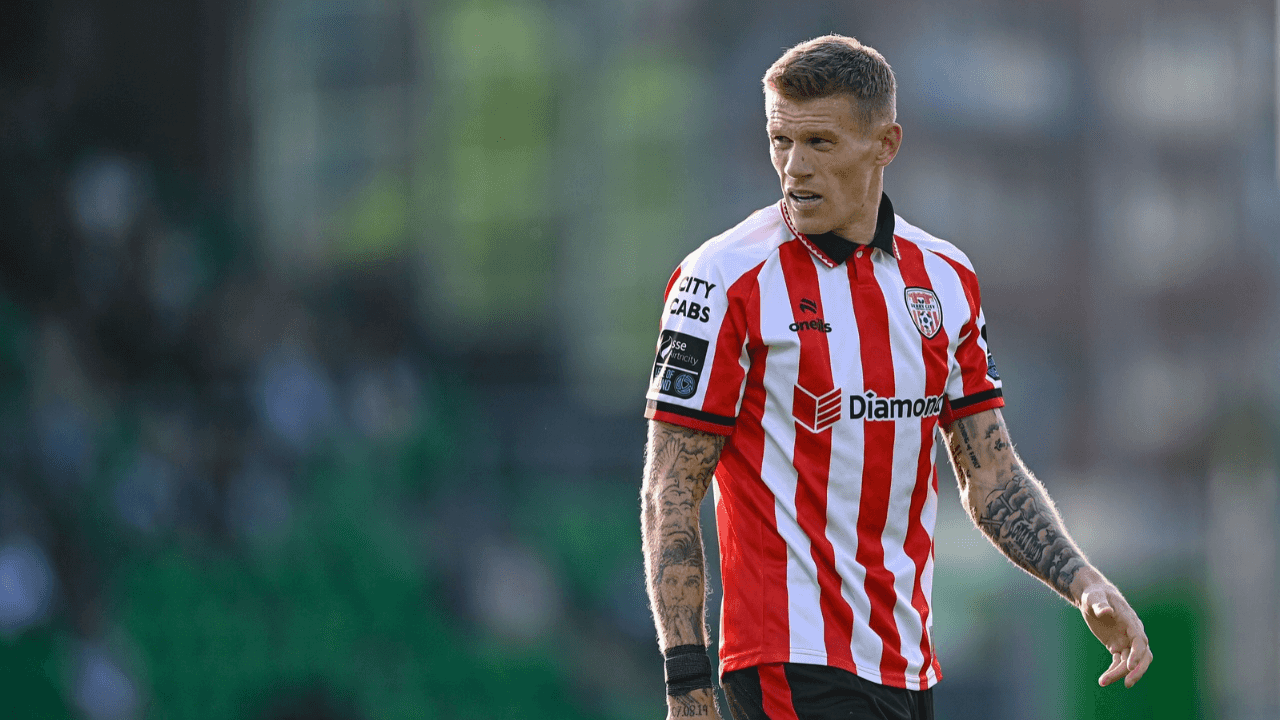
James McClean rightly slammed for comments on men’s therapy
Not his finest moment. Former Ireland international James McClean has come under fire for recents comments made during an interview with journalist Paul Kimmage. Although never shy of courting controversy, McClean’s actions did little to affect his Ireland career, with the Derry man retiring after 103 caps. However, his second spell at Derry, following his […]
Football
4 days ago
The Premier League GW7: Follow all of the viral moments in our live hub
Football returns at the Hill Dickinson Stadium! Everton host Chelsea in the early kick off as the Premier League returns, with David Moyes’ Toffees aiming to remain unbeaten. At 3pm, Brentford host Liverpool, whilst Hull City travel to Fulham. Elsewhere in the North West, Man City host the recently promoted Ipswich Town, who have enjoyed […]
Football
5 days ago
Football
Ireland players apologise to teammate Bazunu after behaviour towards him
Football